The Bridge Keeper and His Son
A drawbridge operator must lower the gears with his own child below. A modern atonement illustration of murky origin. Where did you first hear it told?
Summary
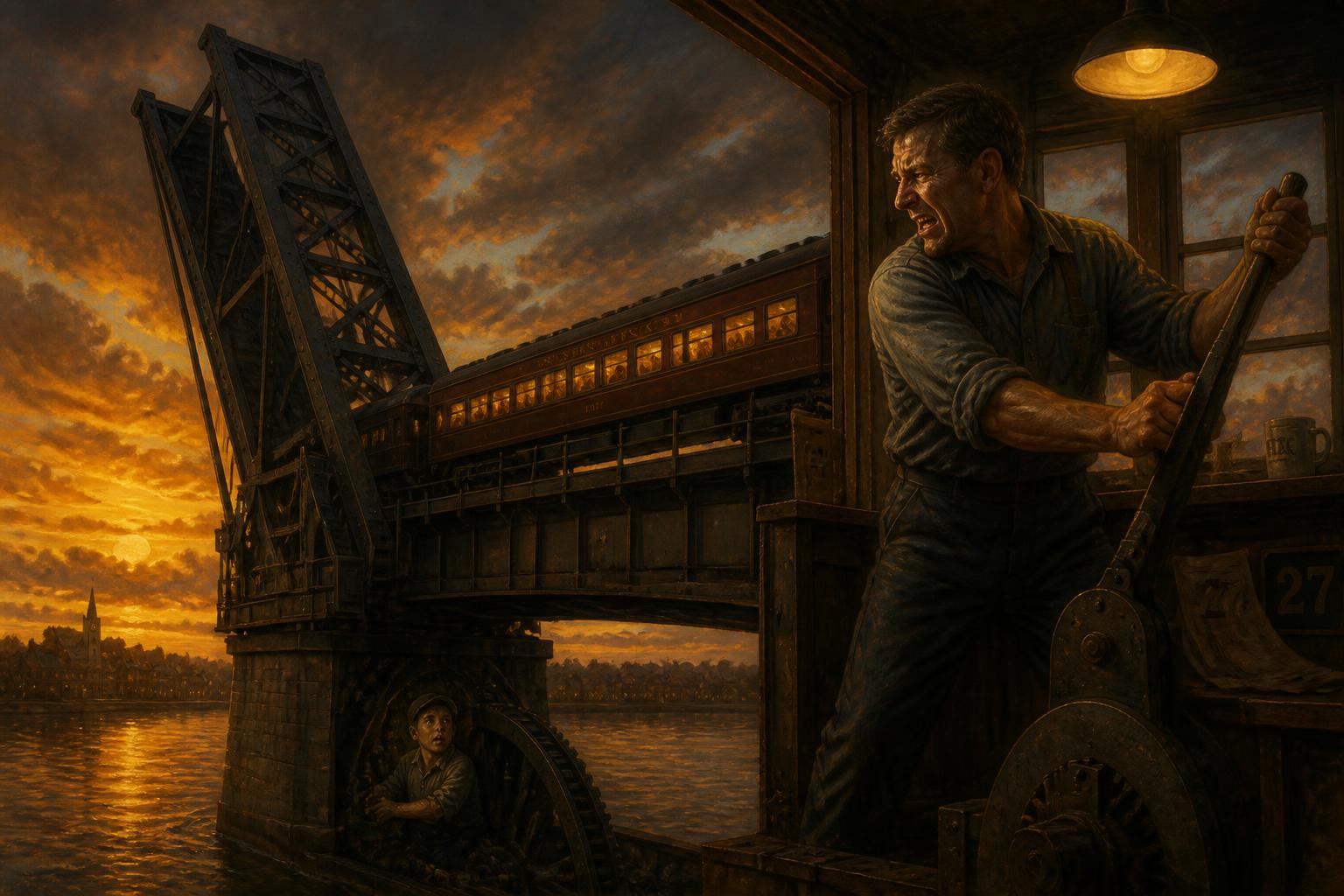
A bridge keeper sees a passenger train approaching and discovers his small son has climbed down among the gears. He lowers the bridge anyway, saving hundreds of passengers who never look up, and loses his son.
Full anecdote
The keeper of a railway drawbridge heard the whistle of the evening passenger train and reached for the lever. Then he saw his young son below, playing among the great gears.
There was no time to climb down and no time to stop the train. Hundreds of people sat reading in the lighted coaches. He pulled the lever. The bridge came down. The train passed over, and not one face turned to the window.
The illustration is preached to picture the Father giving the Son for a world that scarcely notices. Its origin is unclear: it circulates in tract, film, and sermon form through the 20th century without a documented first telling. Contributors are invited to trace the earliest printing, and to note whether any actual bridge incident lies behind it.
Known variants
- Set on a river swing bridge
Some versions name a specific river or town; details differ from telling to telling.
- Filmed dramatization
Circulated as a short evangelistic film in the later 20th century; script source not yet identified.
References checked
- Evangelistic tract literature, mid-20th c.Several printings located; all undated or uncredited so far.
- Railway accident recordsNo corroborating incident identified to date.
First-hearing on record
No first-hearing attribution on file.
This anecdote entered the archive without a named teller, place, or date of hearing. The only certainty we can record is when it was entered here.
- Entered
- Seed entry
- Teller
- Unrecorded
Heard this one from a pulpit? Add your first hearing below and your name goes on the record as the earliest attested hearing.
Community submissions
No community submissions yet. Be the first to add a lead.